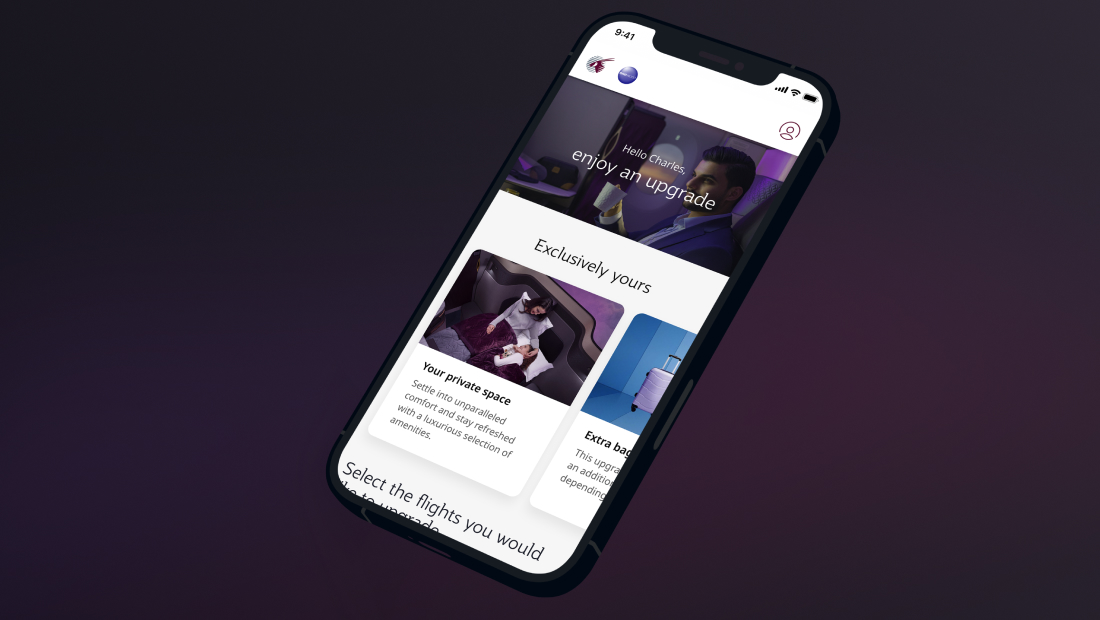
- Team
- 1 designer, 1 business analyst, 2 FE, 2 BA, 1 QA
- Timeline
- MVP + 2.0 release
Overview
Qatar Airways was overhauling their ticket upgrade flow — the experience that lets customers upgrade from economy to business or business to first class after purchase. The project had already failed once under a previous vendor, and the client had lost confidence in the process.
I joined the team at EPAM when we took over the engagement. My job was to assess what went wrong, salvage what was usable, and get a working product shipped — fast.
What I did
Took ownership of a stalled project.
Analysed the previous vendor’s artefacts, identified what was salvageable, and proposed a realistic path to launch — rebuilding client trust in the process.
Insisted on research despite time pressure.
The dev team was ready but had no approved designs. I pushed for a discovery phase to understand the real user journey — mapping the existing flow across a siloed organisation where no single team had the full picture.
Shipped an MVP by working smart, not from scratch.
I identified the most critical UX issues, leveraged 90% of existing screens, and reorganised the flow to address the biggest pain points. This got us to development fast without cutting corners on quality.
Designed the 2.0 and the full ecosystem.
After the MVP, I led the expanded version — group bookings, loyalty point payments, hybrid payment options, and a rebrand aligned with Qatar Airways’ latest guidelines. I also designed the email templates and targeting strategy that served as the primary entry point to the upgrade flow.
The challenge
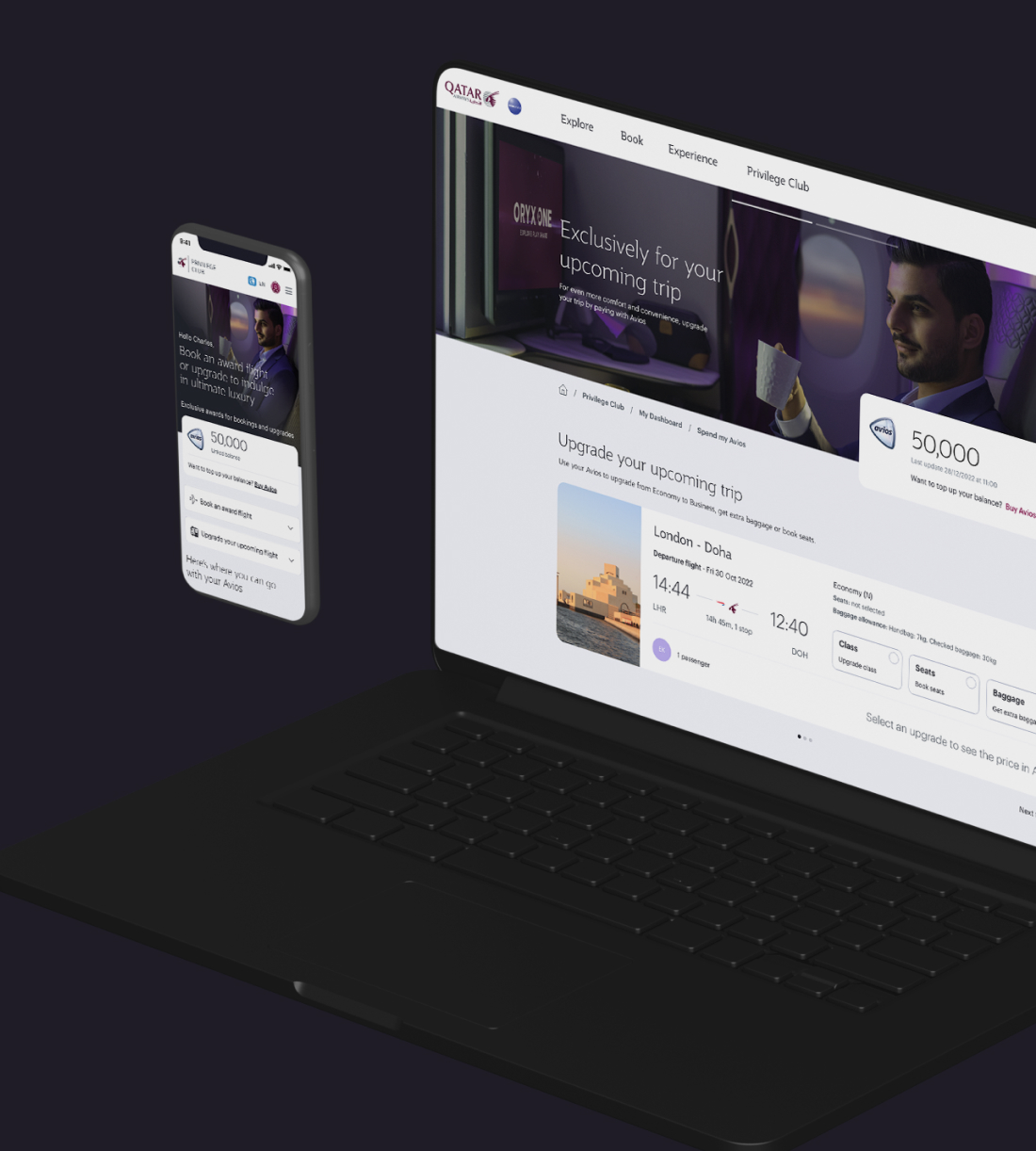
The project had a difficult starting position. A previous vendor had failed to deliver, leaving the client sceptical. The dev team was staffed and waiting, but there were no approved designs to guide them. The internal culture at Qatar Airways was siloed, making it hard to map the full user journey across departments.
On top of that, the upgrade flow touched multiple complex scenarios: multi-leg flights, group bookings, mixed payment methods (cash, loyalty points, or both), and multi-passenger selections. Every edge case needed to work.
The approach
MVP — Ship fast, prove the model
I ran a compressed discovery phase: analysing the previous vendor’s work, leveraging research materials from Qatar’s internal team, and mapping business rules across departments. From there, I identified the most critical UX failures and focused on fixing those first.
Rather than redesigning everything, I reused 90% of the existing screens and restructured the flow — new information hierarchy, clearer flight selection, and a streamlined checkout. This let us get into development quickly while addressing the issues that actually mattered.
2.0 — Expand and refine
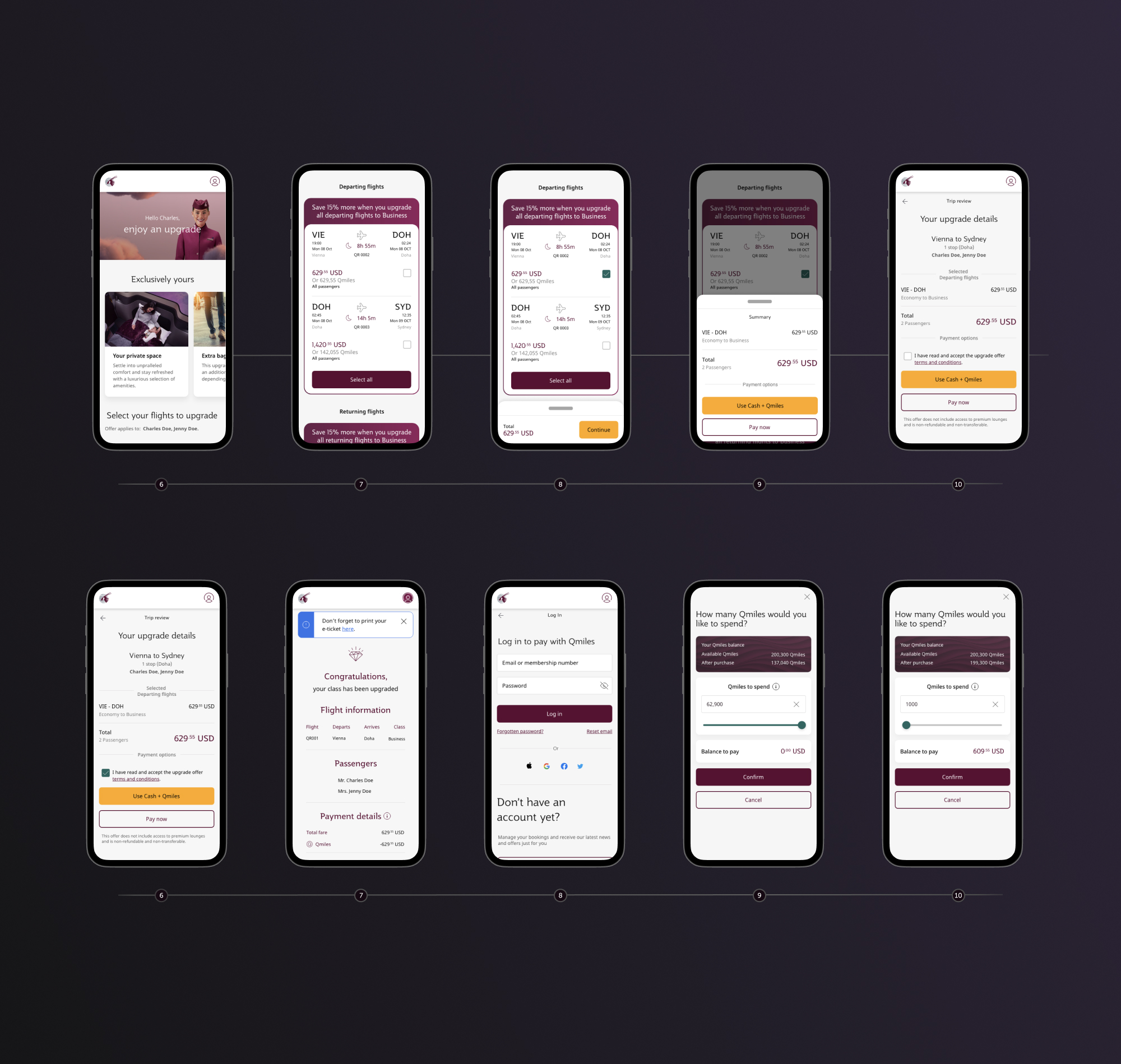
With the MVP in development, I shifted focus to the full product vision. This meant designing for the complex cases: group bookings, loyalty point integration (Qmiles), hybrid payment flows, and a complete UI refresh to match Qatar Airways’ latest brand guidelines.
I also collaborated with the user testing department to assemble a panel and run usability tests on the proposed flows, validating key interactions before committing to development.
Email templates — Designing the entry point
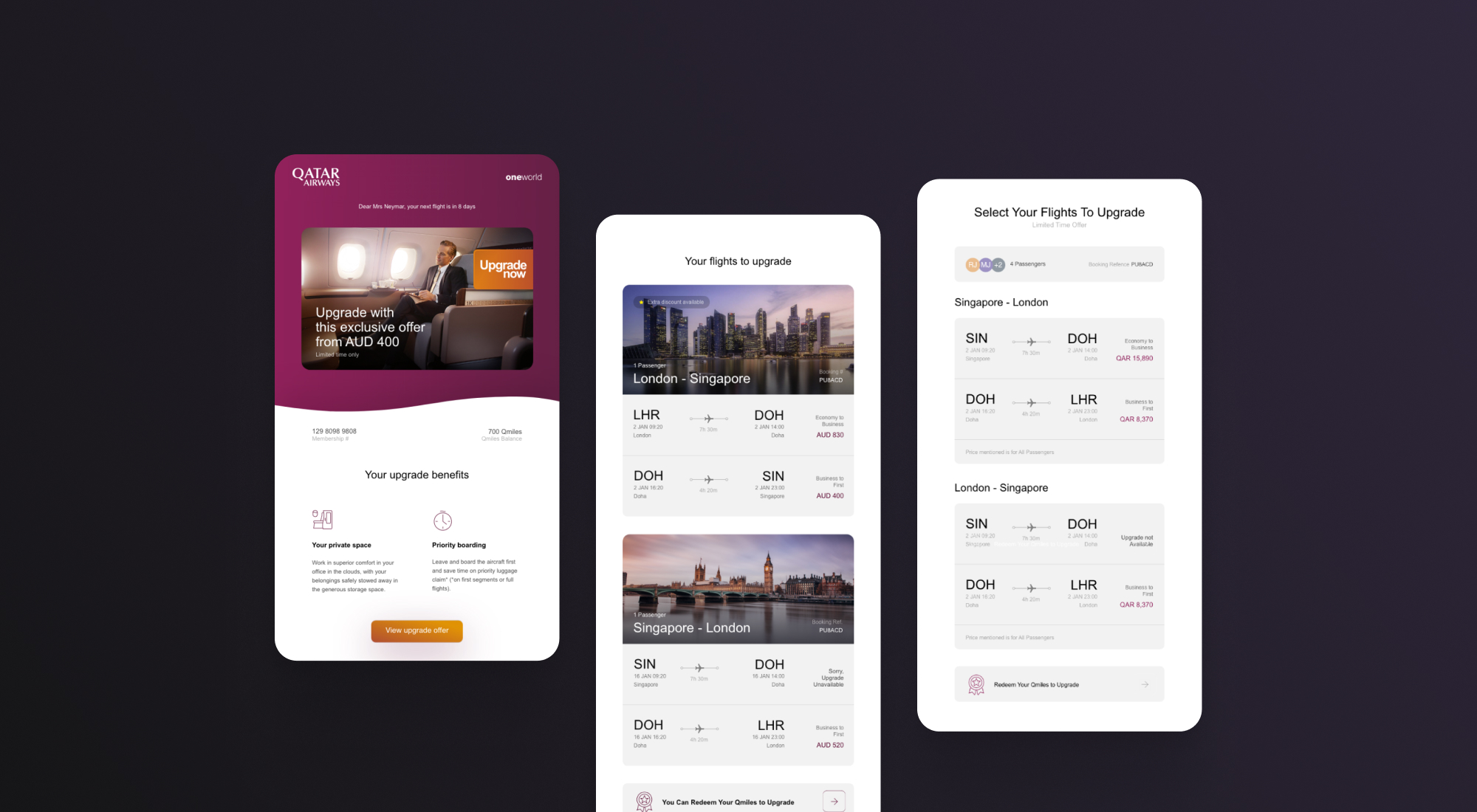
The primary way customers discovered the upgrade offer was through email. The existing templates were outdated and didn’t match the new branding. I redesigned them and developed a targeting strategy with the email marketing team — ensuring the right offer reached the right passenger at the right time.
The impact
$575K
Sales increased by 57.4% year over year.
34%
Bounce rate improvement on desktop.
56%
Bounce rate improvement on mobile.
Beyond the numbers, the project rebuilt trust between Qatar Airways and EPAM. That didn’t happen by accident. The team was radically transparent from day one — full visibility through scrum rituals, honest timelines, and a deliberate strategy of underpromising and overdelivering. That was uncomfortable at the beginning, especially with a client who’d been burned before. But it meant every milestone we hit carried real weight, and confidence grew with each sprint.
EPAM continued as Qatar Airways’ trusted partner.
What I learned
Start with what exists.
When time is tight, the smartest move isn’t always starting from scratch. Reusing 90% of existing screens and focusing fixes on what actually mattered got us to launch faster than a full redesign ever would have.
Research earns its time back.
Even a compressed discovery phase — a few days of mapping, analysing previous work, and talking to stakeholders — saves weeks of building the wrong thing. Insisting on it when everyone wanted to skip straight to design was the right call.
Trust is earned in sprints, not presentations.
The client didn’t need another impressive deck — they needed to see things ship. Our team rebuilt confidence through transparency, honest scoping, and consistently delivering what we promised. That mattered more than any single design decision.